

The lumber distributor you choose can influence you far more than the price of a single order.
Two distributors may quote the same product within a few dollars of each other yet deliver very different results once freight, availability, timing, communication, and inventory support are considered. Those differences eventually appear as stockouts, emergency purchases, excess inventory, missed opportunities, and hours spent following up on orders.
A good distributor should earn it’s place in the supply chain by making your business easier to operate—not simply by adding another transaction.
Before choosing a wholesale lumber distributor, ask these eight questions. Pay attention not only to the answers, but also to how clearly and honestly, they are given.
1. Which Mills and Product Sources Do You Work With?
Strong mill relationships are fundamental to lumber distribution.
A distributor with active relationships across the United States and Canada has more sourcing options when production changes, lead times extend, or specific products tighten. Direct communication with mills can also provide earlier insight into available tallies, excess production, transportation issues, and changing order files.
Ask whether the distributor purchases directly from mills, how frequently its traders communicate with mill personnel, and whether it has multiple dependable sources for your core products.
The number of mills alone is not the answer. What matters is the quality of those relationships and whether they create better options for your business.
2. How Do You Stay Current on Market Conditions?
No one predicts lumber prices with certainty. A distributor who claims otherwise should concern you.
What an experienced partner can provide is current, objective information about production, availability, lead times, freight, regional demand, and developing market risks.
Ask how the distributor gathers and evaluates information each day. Regular conversations with mills, transportation providers, customers, and other participants throughout the supply chain create a more complete understanding than any single report or pricing publication.
The goal is not a perfect forecast. It is better information that helps you make a more informed decision.
3. Can You Consistently Supply the Products We Actually Buy?
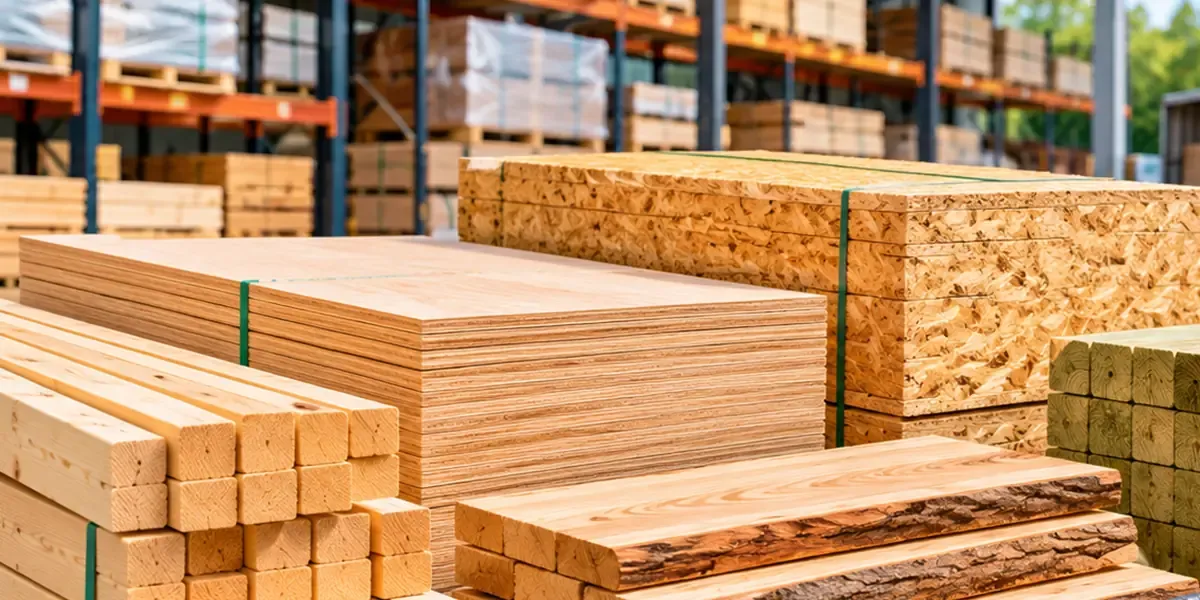
Most buyers need access to a practical mix of products rather than an unlimited catalog.
Depending on the market, that may include:
- Dimension lumber and studs
- OSB and plywood
- Boards and specialty lumber
- Treated lumber
- Rebar and selected building materials
- Direct truckload or carload quantities
- Mixed or regional distribution loads
Ask which products the distributor supplies regularly, which products it can source when needed, and where it’s limitations are.
An honest explanation of capabilities is more valuable than a promise to supply everything. The right distributor should understand your purchasing patterns and help you build the most efficient mix for your business.
4. How Do You Evaluate Freight and Total Delivered Cost?
A favorable mill price can quickly lose its advantage once freight, handling, reload charges, and delivery requirements are included.
Ask whether the distributor coordinates truck and rail transportation, uses regional reloads, arranges direct mill shipments, and tracks the order through final delivery.
The best answer should focus on total delivered cost, not simply the price at the mill.
Rail may make sense for volume and cost. Trucks may provide greater speed, flexibility, or precision. Direct shipment may be the most efficient choice in one situation, while regional inventory may be more practical in another.
A knowledgeable distributor should be able to explain those tradeoffs clearly.
5. Where Is Inventory Positioned, and How Is It Managed?
Inventory positioned near the customer can help fill unexpected needs, reduce lead times, and prevent costly stockouts. However, more inventory is not always better inventory.
Ask where the distributor’s material is located, what products are normally available regionally, and how inventory decisions are made.
Disciplined distribution is about carrying the right products in the right markets while maintaining enough flexibility to respond when demand changes.
A strong distributor should be able to support immediate needs while also helping customers avoid unnecessary inventory, excess exposure, and products that do not meet their normal demand.
6. Will You Tell Us When a Purchase Does Not Make Sense?
This may be the most revealing question.
A trustworthy distributor should occasionally advise a customer not to buy—when the tally does not match demand, freight eliminates the apparent savings, the volume creates unnecessary exposure, or the product is likely to sit too long.
Ask for an example of a purchase the distributor recommended against and why.
Objectivity protects the customer’s margin and working capital over time. A distributor focused only on completing the next sale is not acting as a long-term partner.
7. What Happens When Something Goes Wrong?
Shortages, damage, shipping delays, and incorrect material can occur in any supply chain.
The real test is how the distributor responds.
Ask how quickly problems are acknowledged, who takes ownership, how claims are managed, and whether replacement material or another solution can be found while the issue is resolved.
Dependable service does not mean that nothing ever goes wrong. It means someone communicates, accepts responsibility, and stays involved until the problem is addressed.
8. Do You Understand Our Market and Our Business?

Regional knowledge matters, but understanding the individual customer matters just as much.
A distributor serving Midwest lumber yards, retailers, pro sales operations, and industrial buyers should understand regional freight lanes, seasonal demand, construction cycles, product preferences, and the different inventory needs of each customer type.
Ask about the distributor’s experience in your market, how long it has served similar customers, and whether it can provide relevant references.
Industry memberships and longevity can support credibility, but the most important question is whether the distributor understands how your business operates and what you are trying to accomplish.
The Best Questions Reveal the Right Partner
Price will always matter, but the lowest quote does not automatically produce the lowest total cost.
Clear answers about mill relationships, market knowledge, product capabilities, freight, inventory, objectivity, problem resolution, and regional experience can reveal whether a distributor will strengthen your business—or simply sell you another load.
At Frontier Forest Products, we welcome these questions.
Since 2005, we have helped Midwest lumber yards, retailers, pro sales operations, and industrial buyers source lumber and building materials with greater confidence. From Kansas City, Des Moines, and Tulsa, our team combines active mill relationships, daily market knowledge, coordinated transportation, regional inventory access, and straightforward recommendations.
Sometimes that means finding the right product quickly. Sometimes it means identifying a better freight option. Occasionally, it means recommending that a customer not make the purchase at all.
Our objective is not simply to sell lumber. It is to help customers make better purchasing decisions, reduce friction throughout the supply chain, and keep their businesses moving.
That is how Frontier works to keep lumber simple.
